Glasgow Now and Then
Celebrating ten years of GLARC and back to the 1970s with Tom McGrath and the Third Eye Centre

The closure of Glasgow’s CCA (Centre for Contemporary Arts) earlier this year, along with the now averted threat to Trongate 103, has underlined the precarity of the city’s cultural infrastructure. Neo-liberal austerity has made it a harder place to live and make art in some respects, but people are still digging in and making brilliant things happen, from the good folks behind free-wheeling residencies like Baked Beans On The Doorstep and 1.5 Months, to world-class festivals like Counterflows, Arika and Tectonics, and organisations like Glasgow Improvisers Orchestra and Sonic Bothy.
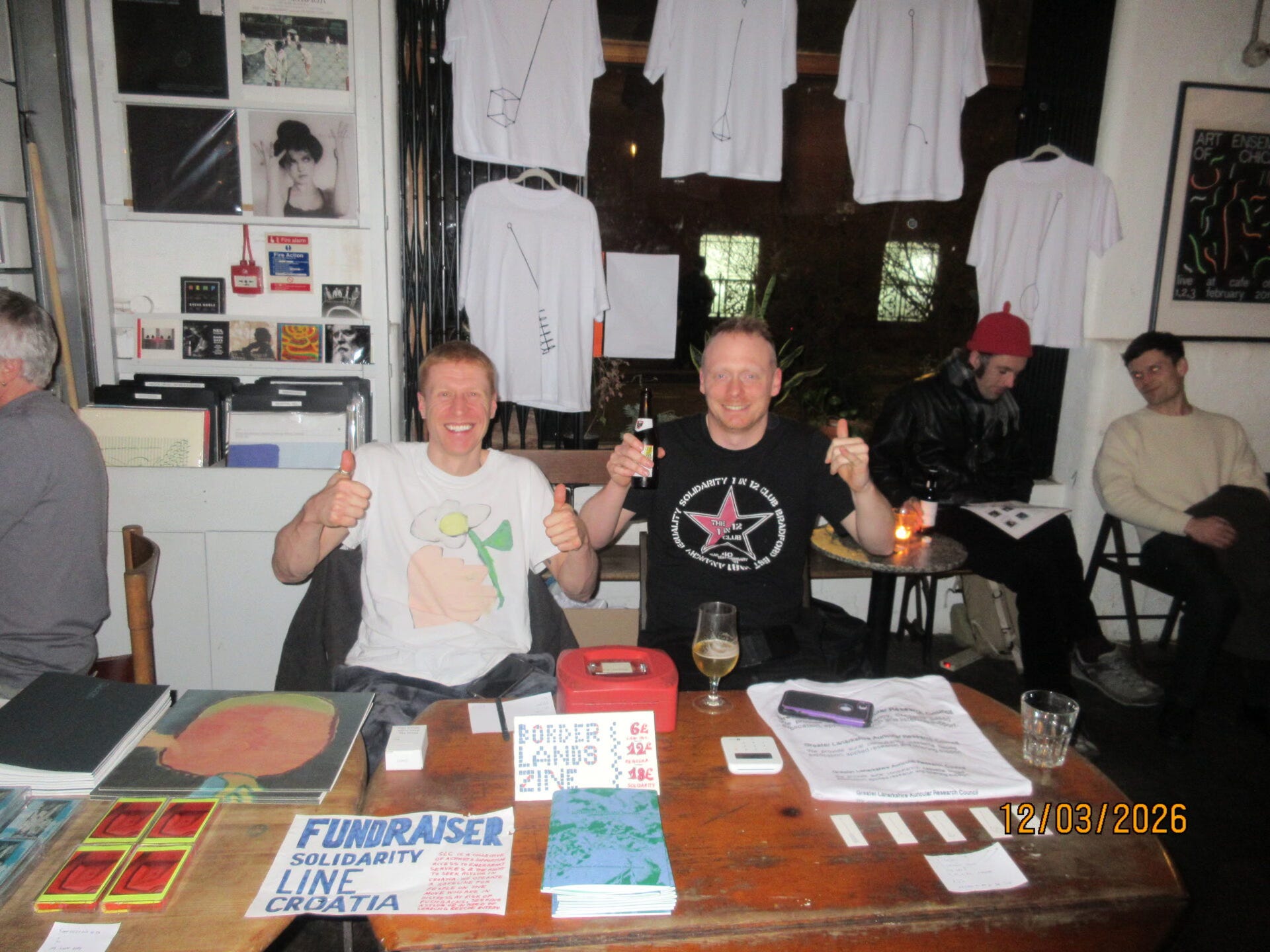
One of the best things to come out Glasgow in recent years is GLARC (Greater Lanarkshire Auricular Research Council), a DIY tape label which recently celebrated its tenth birthday. They’re probably best known for introducing the wonderful Still House Plants to the world, as well as acclaimed folk singer Quinie and Gaelic futurist Harry Gorski-Brown, but they’ve put out a whole bunch of great stuff, from the bonkers bedroom prog of Horse Whisperer aka Max Syed Tollan, to the absurdist noise rock of L and the remarkable Slovenia Inshallah, an abolitionist sonic ethnography by Masa Nazzal and Ilyas Titaou. GLARC has carved out a distinctive space in the Glasgow music sphere, championing the weirder aspects of the city’s DIY scene while making international connections. Their tapes are beautifully presented and their politics are excellent. It’s the antithesis of the stifling indie nostalgia that dominates mainstream and legacy media accounts of Glasgow culture. I’ve been following the label since its inception, so it was lovely to reflect on some of its key releases with co-founders Joel White and Gordon Bruce (who makes great weirdo club music as Brunnera) for The Quietus.
“How do we do DIY in a way that doesn’t just feed these weird myths and fantasies about a place like Glasgow, whilst also celebrating all the things that are brilliant about it?”
Joel White, GLARC
Back to the CCA. Its closure is a tragedy and this piece by Jaimie Dunn makes clear what’s at stake. What will happen to its archive, an incredibly rich resource covering the CCA and its previous incarnation as the Third Eye Centre, remains to be seen. I drew on that archive in my Third Eye Jazz project, which was very much about illuminating overlooked areas of Glasgow cultural history and celebrating the venue’s founding principles of cultural democracy. I’m revisiting that project - with some new material - in a talk for the University of Mainz’s Reading Scotland series tomorrow at 5pm UK time. I’ll be discussing jazz and poetry (and Jazz & Poetry) in 1970s Glasgow, centred on Tom McGrath and the Third Eye. Lots of archival footage, including Bob Cobbing with David Toop and Paul Burwell, Scottish jazz group Birth, and McGrath himself. My connection with Mainz came about after I sought a home for my late mum’s Scottish book collection (I’m going to write something about this further down the line). Professor Sigrid Rieuwerts kindly offered to bring the collection to Mainz, where I know those books will be read and loved for many years to come. I’m delighted to be presenting this research again: the freewheeling energy of that period remains an inspiration. Everyone’s welcome to join the Teams meeting and if you can’t make it, don’t worry - it’ll be archived on Youtube.
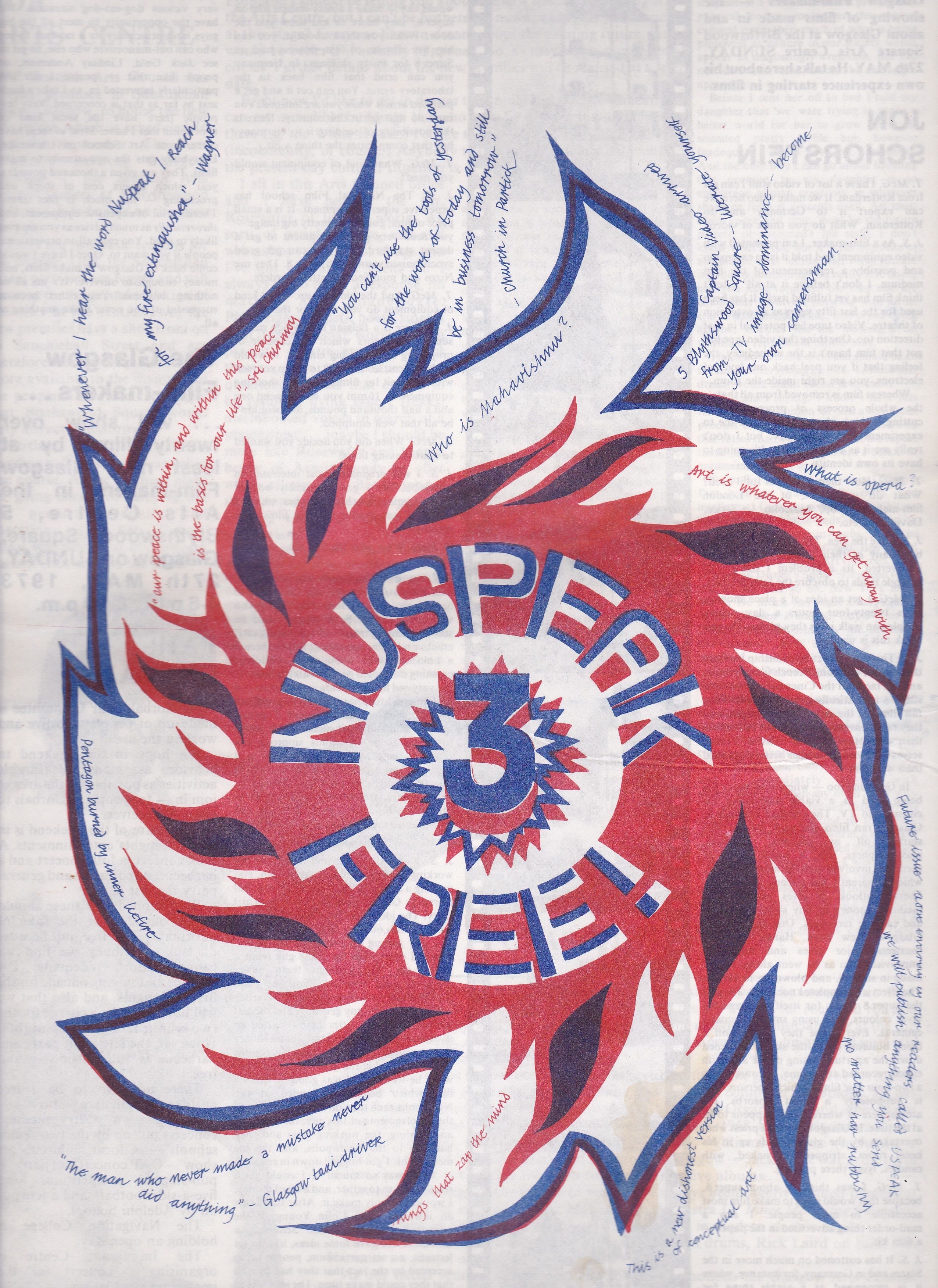
Let’s end with a quote from McGrath himself. This is from his “Very Strange Editorial” in the May 1973 edition of Nuspeak, the Scottish Arts Council newsletter he published in the run up the Third Eye’s opening in 1975. He talks about the wide range of events he’s attended in Glasgow, from rock concerts and folk clubs to German opera, and reflects on his seven-year-old daughter’s upset at television reports on the Vietnam War, acknowledging that in the light of such “political horror movies”, much of what is presented as culture in our society “would appear as disgustingly irrelevant.”
“[I told her] ‘we’ were trying to make a better world for her to grow up in and while it felt inadequate, I meant it… The only way I can go about fulfilling this promise to my daughter is to encourage human creativity in whatever shape or form it presents itself… Art must claim space and time, must be the future pattern of everybody’s life style. I do not know what art is, but it is the opposite of alienation. Being artistic means being completely involved, bursting with ideas, enthusiasm and patience… That’s how I think everyone should be all the time in everything they do. To fulfil that dream would entail social revolution.’
Tom McGrath, Nuspeak 3, May 1973